Twice a year, almost like clockwork, the wanderlust strikes me and I get the urge to go see what’s over the horizon.
It happens in the spring, when the warm winds start to blow and low gray clouds go scudding across the sky. It happens again in the fall, when the sky overhead turns a deep, crisp blue and the leaves start to fall from the trees.
Both times of the year, all I want to do is hop in the car and hit the road.
And it has to be by car — flying just won’t cut it. I think this stems from childhood road trips with my family. People questioned why my father, who makes a living as a truck driver for UPS, would want to spend his vacations driving us across the country when it would have been more relaxing for us to fly.
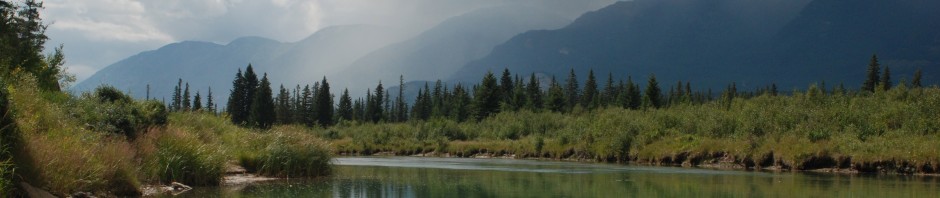
But driving always made much more sense to me. How else do you get to see the vast American landscape roll past your window — the endless grasslands of the Midwestern plains, the red-rock mesas of the desert Southwest or the towering snowcapped Rockies that form the backbone of the continent?
I’ve often wondered if this yearning to see something new is a genetic trait; my ancestors on both sides of the family weren’t the type of people who were content to stay where they were.
On my dad’s branch of the family tree are the McNeels, Scots-Irish immigrants who left the Old World for Pennsylvania in the early 1800s. They continued their westward journey to Indiana, where my great-grandmother was born in 1880, before moving across the prairie to Kansas in the 1890s.
My great-grandmother was a true pioneer: As a young single woman at the turn of the last century, she homesteaded a lonely patch of land on a windswept plateau in eastern Wyoming for four years; she eventually moved to the Portland area with her husband and children.
The Hoods and the Sharons on my mom’s side of the tree were no less restless. One enterprising ancestor arrived in the fledgling colony of Virginia in 1620; his descendants popped up later in Kentucky, then later still in Missouri during the Civil War.
The family apparently enjoyed Missouri — they were still there when my grandparents married in the 1930s. Grandma and grandpa soon moved on, however, ending up in Idaho in the 1950s after a series of moves to Ohio and California.
At the other end of the spectrum are the people who have been on the same land for generations. There are people in Kentucky whose families followed Daniel Boone through the Cumberland Gap, then never went any further.
The urge to get up and go isn’t a recent development in the human race. In the March issue of National Geographic, there was an article about the Lapita, an ancient people who were ancestors of the Polynesians. More than 3,000 years ago, the Lapita were exploring the South Pacific, crossing hundreds of miles of open water to discover uncharted islands.
Archaeologists still don’t know how the Lapita accomplished these miraculous voyages; remains of their canoes have never been found. But they know there was no scientific reason for the Lapita to leave their homes, lush tropical paradises where land and food were plenty.
“They went,” one archaeologist said, “because they wanted to go and see what was over the horizon.”
My kind of people.
 Jocelyn Robinson